Jaggaer AI (JAI): Designing an Enterprise Copilot System
Transforming Complex Enterprise Procurement with an Intelligent Copilot. How we architected the core interaction framework, extended the design system, and defined stateful UI behaviors to seamlessly embed JAI into enterprise procurement workflows.
Jaggaer AI - Conversational AI Experience (CAIX)
Jaggaer AI (JAI) serves as a conversational-based intelligent operational backbone across enterprise procurement, transforming sourcing and supplier management.
Here are the compliance details for the 2 pending suppliers. Both require your review before onboarding can finalize:
- ⚠️ Apex Industrial Supply — Missing updated ISO 9001 certification (Expired Aug 1, 2026). Action required.
- ⚠️ CamCo Electronic Manufacturing — Missing updated ISO 500B certification (Expired Aug 1, 2026). Action required.
I've aggregated real-time market trends, compliance gaps, and financial impact for both targeted suppliers:
I'm transferring this active thread to your dedicated Category Lead along with full conversation context and risk metrics.
Hi Herb, I've reviewed the context JAI provided regarding CamCo's expired ISO certification and supply risks. I'm opening a formal legal amendment and will handle the direct supplier discussion now.
Transforming Complex Enterprise Workflows
Enterprise procurement platforms are notoriously dense. Users navigate complex data tables, multi-page workflows, and intricate supplier rules. Jaggaer needed an AI assistant—JAI—to help users accomplish tasks faster without getting lost in the interface.
The challenge wasn't just building a chatbot; it was designing a core framework that knew when to help, how much space to take up, and how to scale Jaggaer’s existing design system to handle non-deterministic AI responses.
Extending the Design System for AI
To support AI-specific interactions, I scaled Jaggaer’s core design system, creating new components and design tokens specifically for AI behavior to build trust and convey system intent.
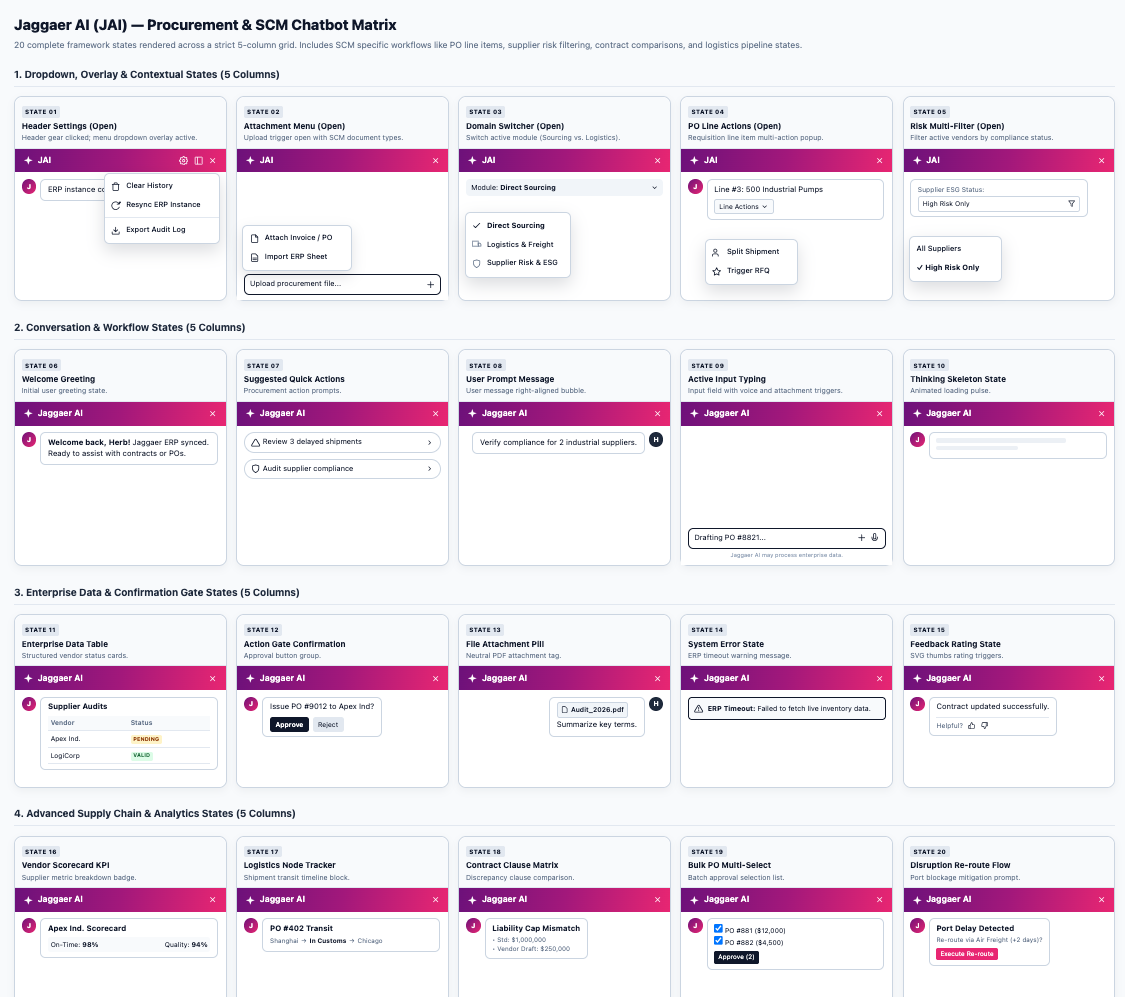
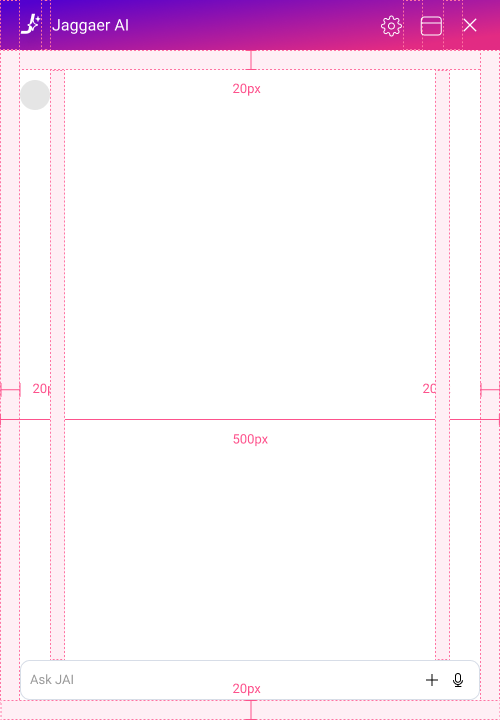
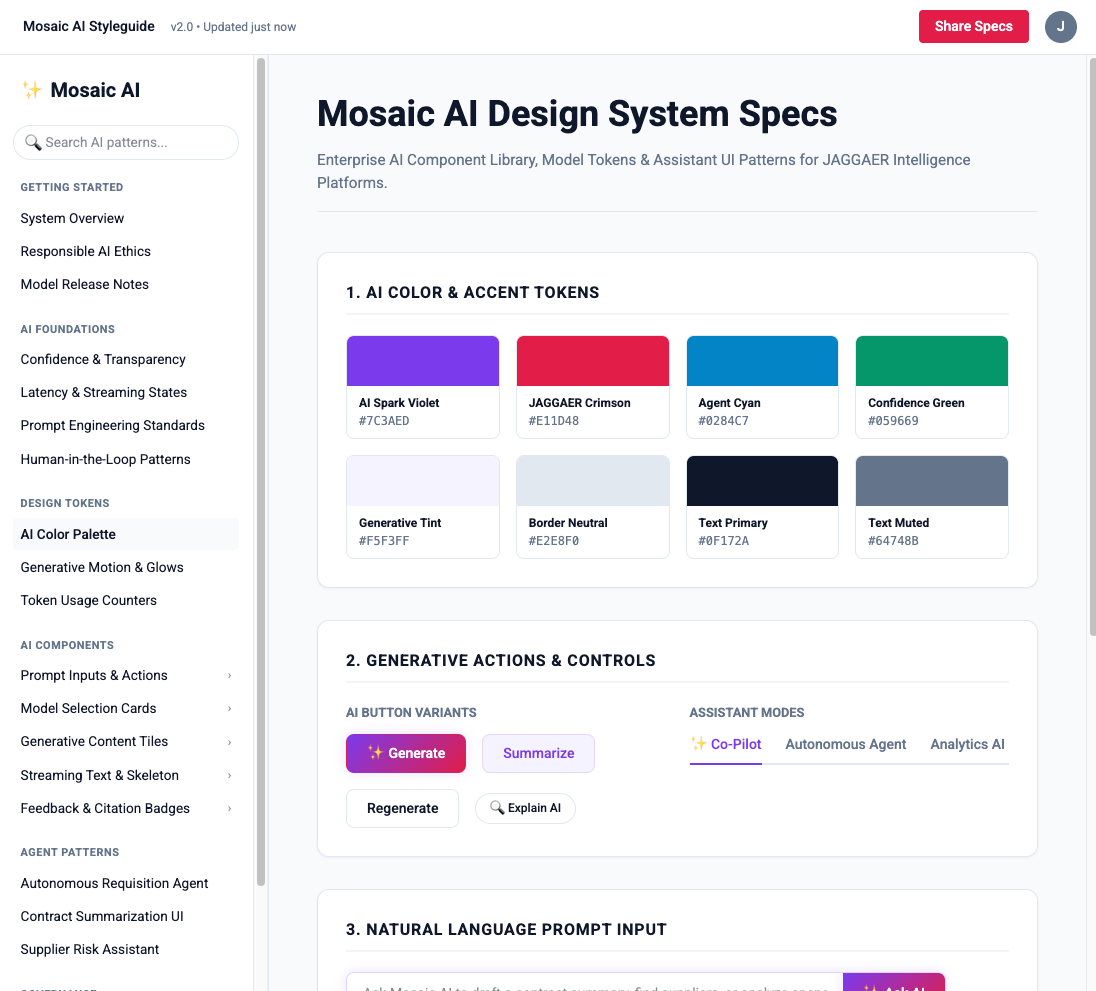
- Command dropdown menus & prompt suggestion pills
- Slash-command triggers for targeted tool routing
- Active input indicators for attachments & context files
- Streaming text indicators & inline reasoning states
- Source attribution cards with direct reference links
- Confidence metrics & verifiable data citations
- Message-level editing & prompt regeneration
- Thumbs up/down feedback loops
- Structured reporting & issue modal slots
- Strict keyboard navigation paths across all 3 view modes
- Screen-reader focus management for streaming text
- High-contrast visual status indicators
Solving for Real Estate (The 3 View Modes)
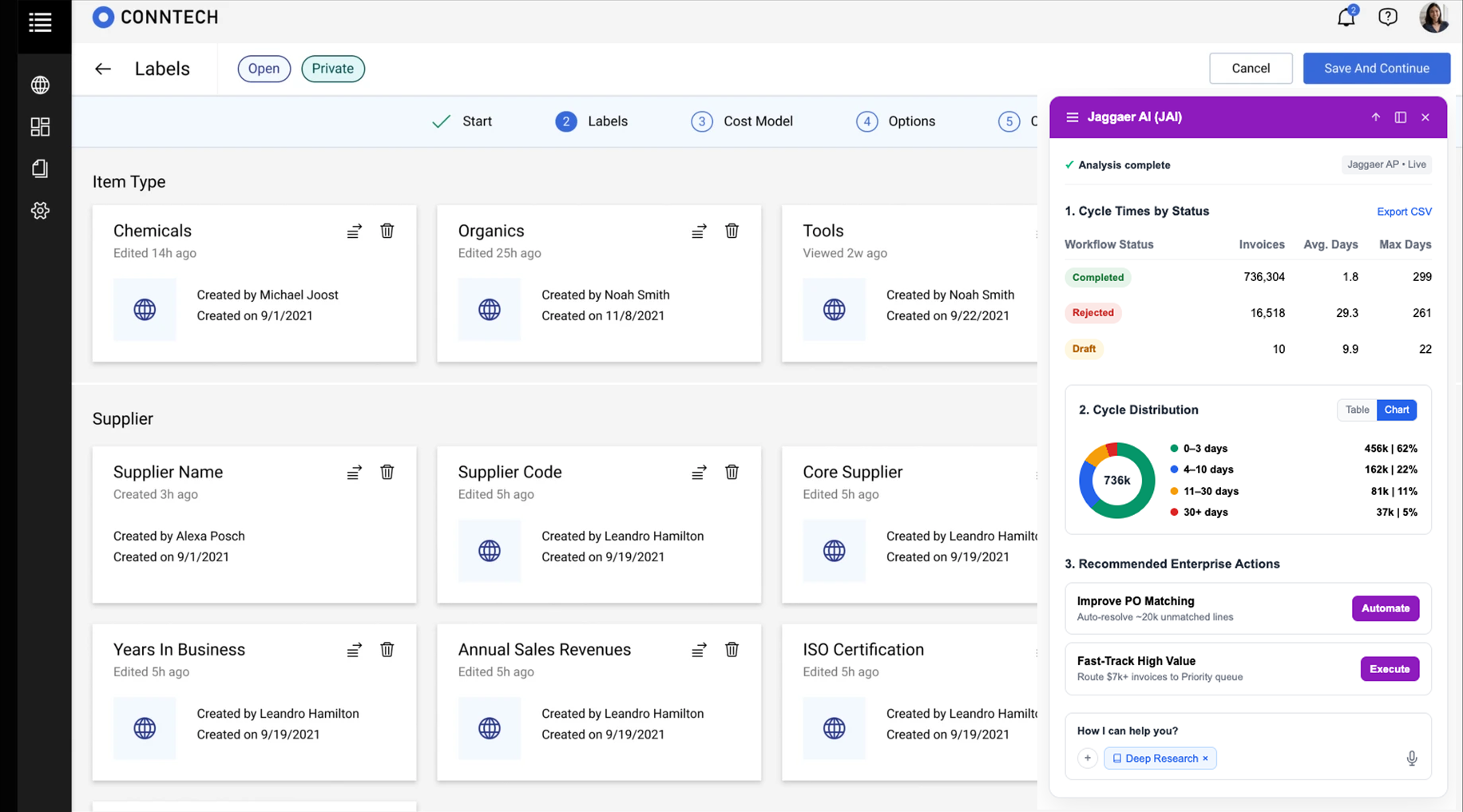
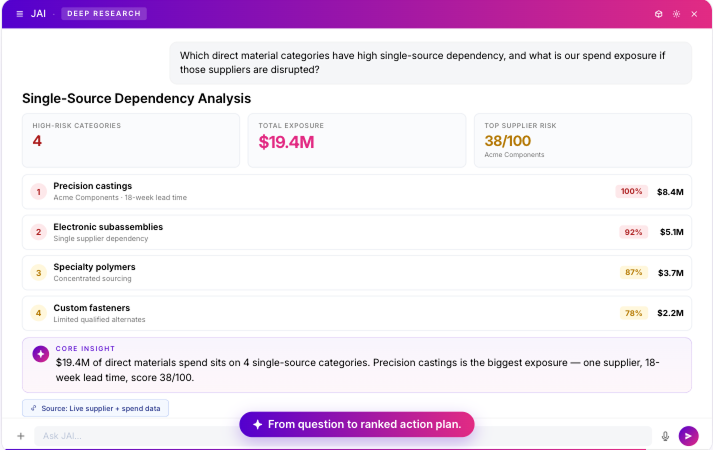
AI assistance isn't one-size-fits-all. A user asking a quick question needs a small overlay, but a user analyzing vendor trends needs maximum screen real estate. I designed a flexible, 3-tier view framework:
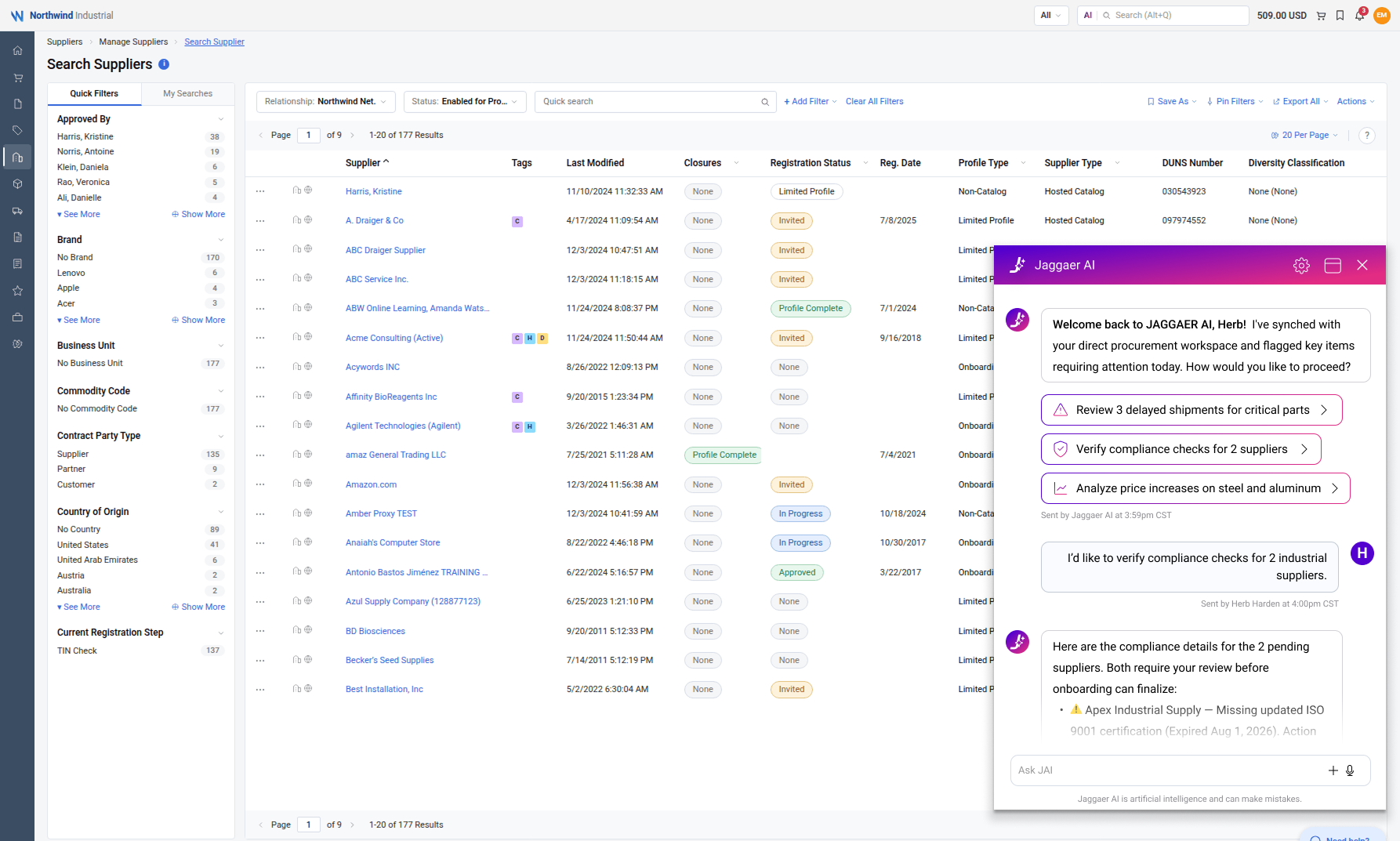
| View Mode | Primary Purpose & Strategy |
|---|---|
| Small Chat | A compact overlay anchored to the bottom corner for quick queries and proactive prompts. |
| Siderail / Copilot | A docked side panel designed for side-by-side work (e.g., editing a document while chatting with JAI). |
| Full Screen Mode | A fully expanded view with responsive grid layouts built specifically for complex data tables, analytics, and heavy visualizations. |
User Interaction Specifications
Beyond high-level visual layouts, enterprise AI requires precise system-level mechanics. These case studies explore how the platform handles complex agentic behaviors—from human-in-the-loop safeguards to translating natural language into transactional platform actions.
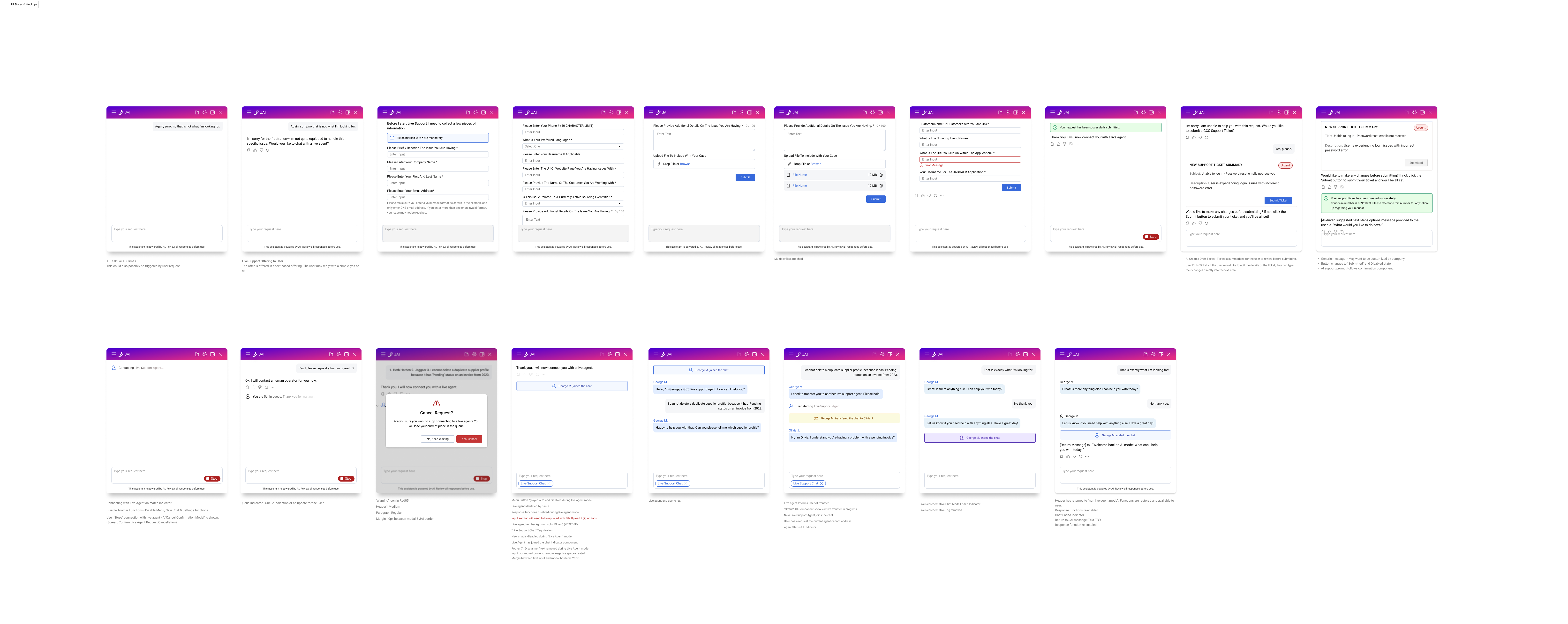
Multi-step human-in-the-loop validation patterns that allow procurement leaders to audit, override, or roll back automated AI decisions safely.
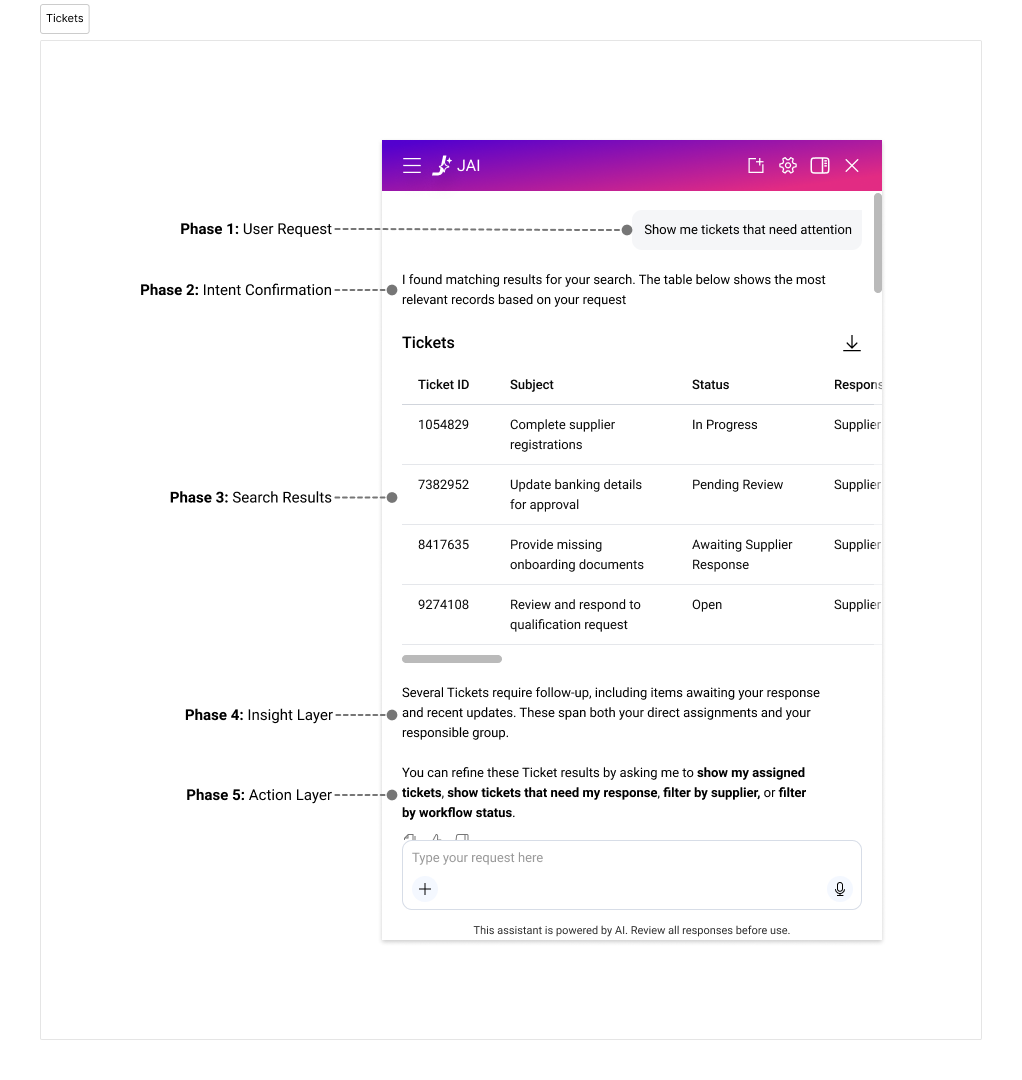
Converting natural language queries into structured workflow executions, bridging informal conversational inputs with transactional system operations.
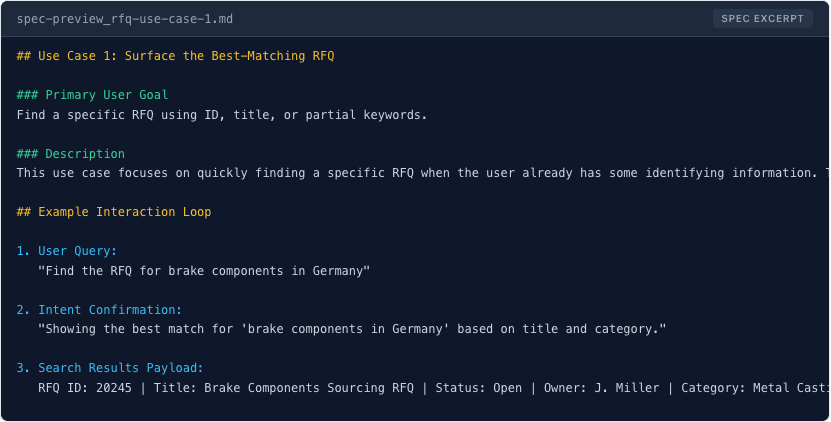
Standardized design token and response specifications built into the Mosaic design system to enforce consistent layout payloads across modular micro-frontends.
Market Launch & Production Impact
The Jaggaer AI Copilot shipped to production as a core platform capability across global procurement teams. Scaling from design system specs to a live commercial offering validated both user satisfaction and market position.
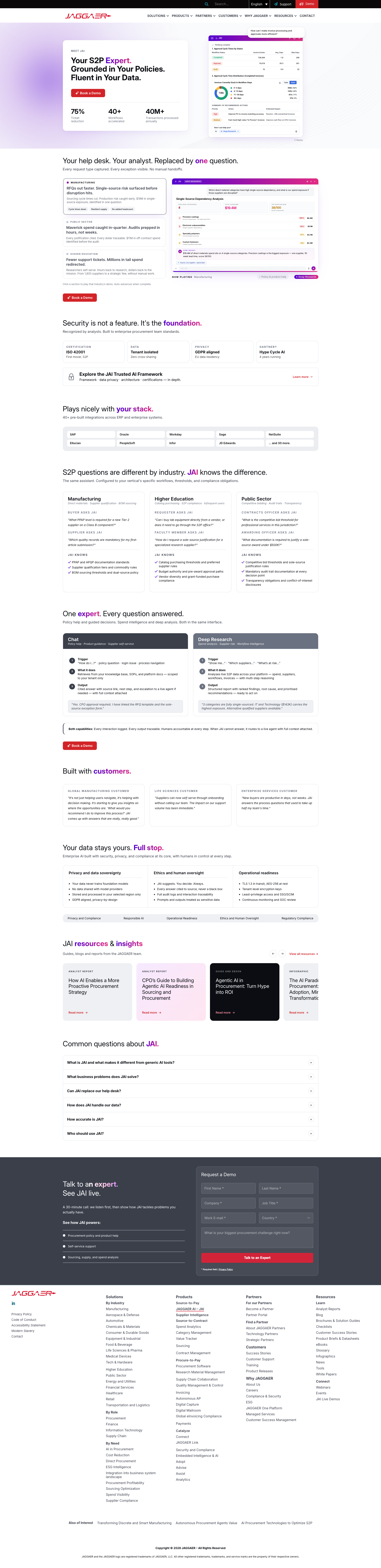
Positioned as Jaggaer's flagship S2P conversational intelligence engine across global enterprise markets.